In the past, organizations used
physical servers to run their applications. When multiple applications
operated on the same system, some would monopolize most resources, leading to
underperformance in other applications. Unfortunately, there was no mechanism
to establish resource boundaries for applications on a physical server,
resulting in allocation issues.
To tackle this challenge,
virtualization emerged as a solution. With technologies like Hyper-V,
multiple virtual machines (VMs) could run under a single CPU. This approach
not only saved on hardware costs but also facilitated improved scalability by
enabling easy addition or updating of applications. However, virtualization
had its limitations, as each VM represented a complete machine with its own
operating system and virtualized hardware.
In
response to these limitations, containers were introduced. Containerization
involves packaging software code along with all its essential components,
such as libraries, frameworks, and dependencies, into an isolated
"container."
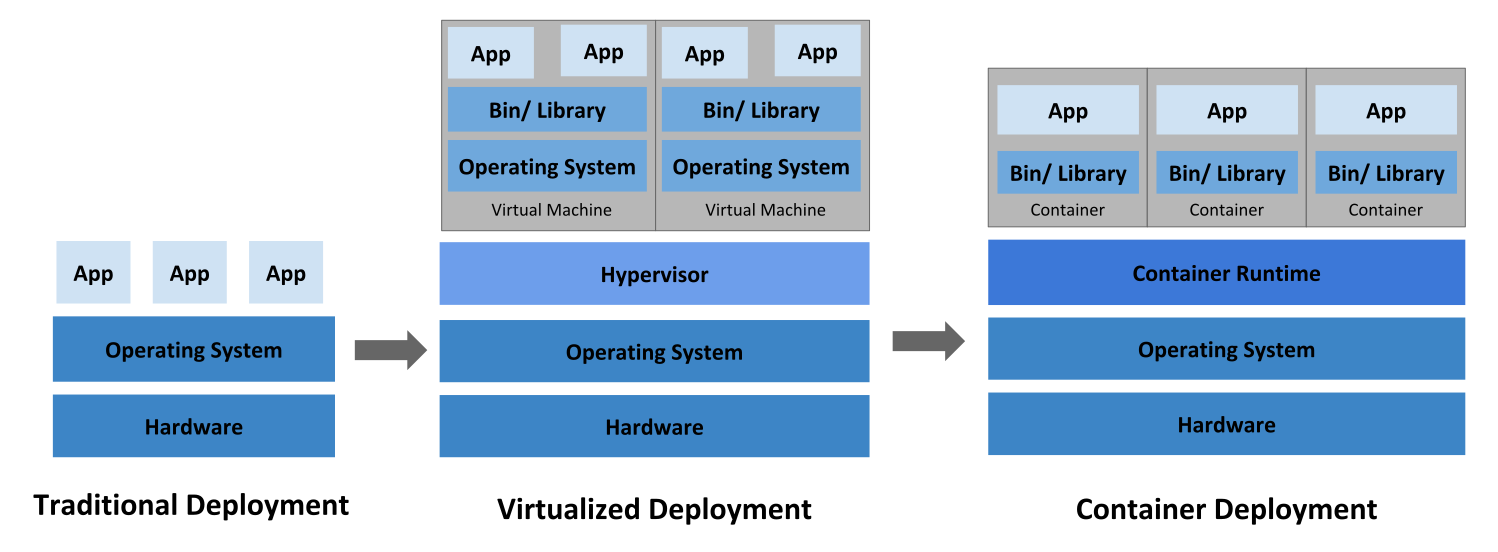
source:Overview | Kubernetes

No comments:
Post a Comment